Not yet another tool: Why you need to Try it with Ann
TL,DR; Ann shortens the feedback loop from idea to working solution.
Because of the short feedback loop you will be able to explore more alternatives, this allows teams to optimize solutions for:
- shorter time-to-market
- improved operational excellence
- or a reduction in complexity
All the work done with Ann serves one goal: to design solutions that deliver value.
Introduction
Software powers every business. From international shipping companies to independently owned small businesses, businesses live and die by their code. But not every employee is a software developer. Many major business and product decisions are made by people who don’t know how to write their own software. Low-code and no-code tools like Loveable and Claude Code have leveled the playing field somewhat, but they don’t address the common use case of communicating business requirements and technical restrictions between product stakeholders and software developers.
When it comes to building better software, it can be challenging to translate ideas and requirements into comprehensible steps, decision points, and success and fail states that result in discrete chunks of code. Key stakeholders in a design or product solution may not be able to communicate what they need realistically. Software developers may not always build with the business outcomes in mind.
A tool exists to help bridge these two viewpoints: it’s time to Try it with Ann.
What is Try it with Ann?
Try it with Ann lets you define how things work, and turn those definitions into executable specifications for your engineers to build. By doing so, Ann enables you to turn business requirements into real software, and to iterate on it in fast cycles. This is possible because Ann leverages proven patterns and principles from the software engineering community, such as Domain-Driven Design, Test-Driven Development, and Continuous Delivery.
Unlike other no-code and low-code solutions, Ann builds on an existing ecosystem of apps (Miro, GitHub, Confluent), standards (JSON Schema, OpenAPI, MCP), and cloud-native architecture (Amazon Web Service, Google Cloud Platform, and Microsoft Azure) which prevents vendor lock-in and eases onboarding.
Try it with Ann allows you to determine how a good solution should work, from the KPIs to the code.
Who loves Try it with Ann?
Try it with Ann is for product owners with access to domain knowledge who want to frequently iterate on methods of work and ideas until they align on the perfect solution for them. It helps customers to capture the essential complexity of the business process, rather than the data flowing through the organization.
Our product Ann Studio offers tools to capture business processes in a visual format, which you can use to produce working software with the click of a button. The code Ann produces is understandable, extensible, scalable and well aligned with the nature of the business.
Use case example: Rental car inventory management
Piotr is a project manager at SuperCar, a rental car company. His current project is to ship an online workflow that allows employees at physical car lots and on SuperCar’s web portal to rent cars to customers, as well as check in cars that customers have returned. Piotr works with Sarah, the software engineer who is responsible for the code.
But Piotr and Sarah have a problem, they live and work on different sides of the planet. Real-time collaboration is impossible, or at least very difficult, so Piotr uses Try it with Ann to describe the steps and outcomes of the experience he wants SuperCar’s customers to have.
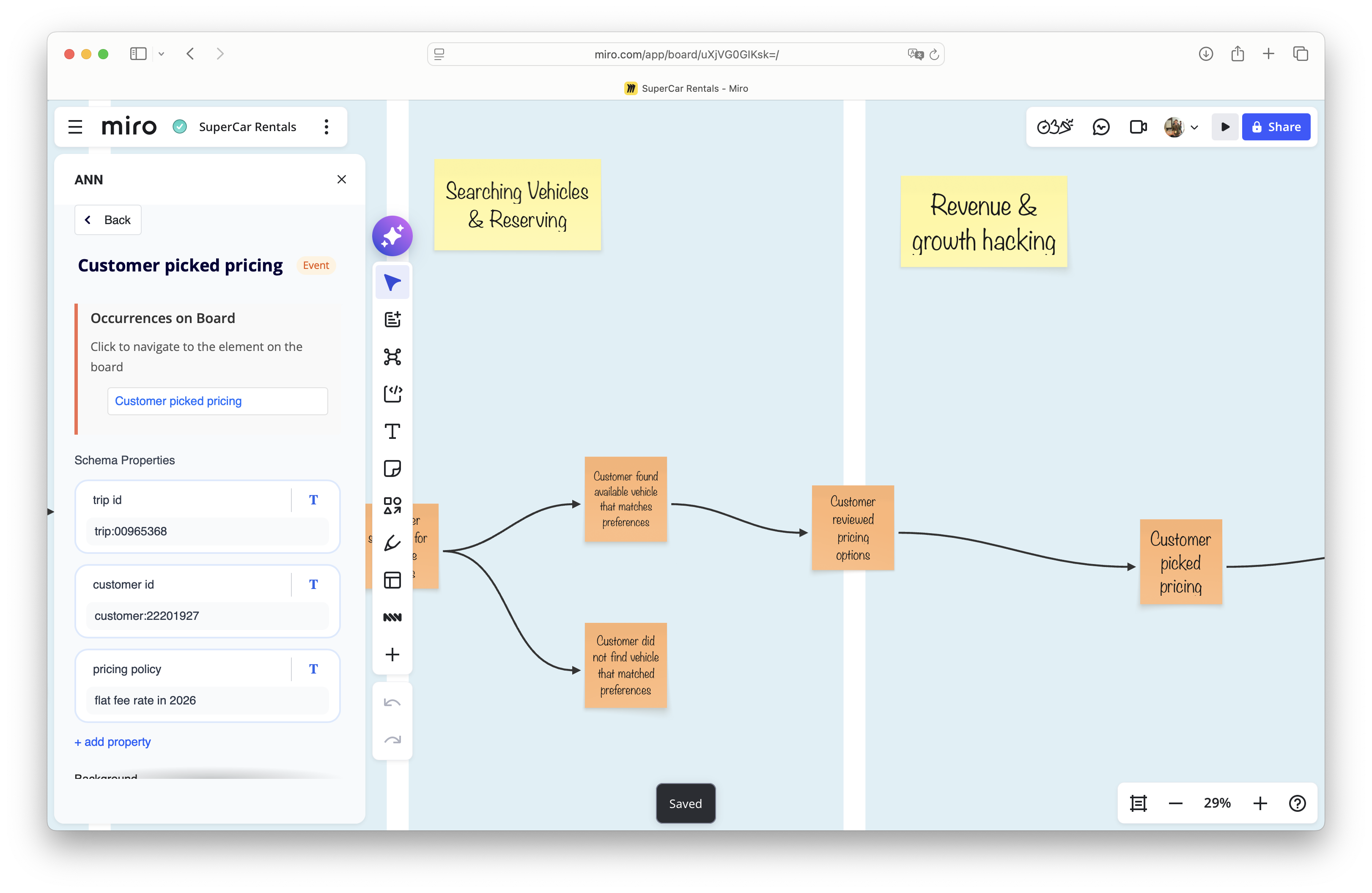
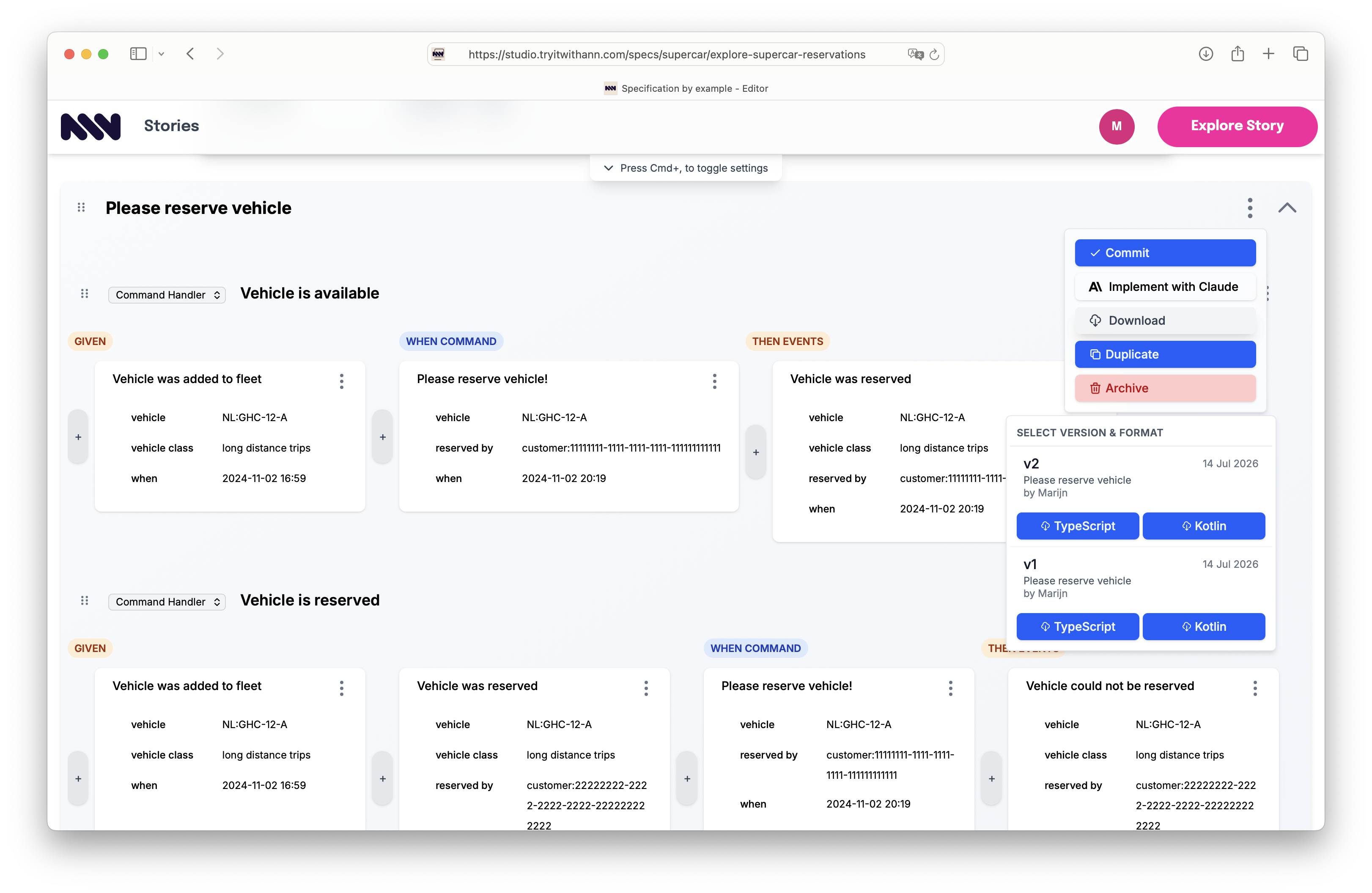
After Piotr has described the steps and outcomes he wants in Try it with Ann, he sends the process he’s written to Sarah. She can easily export an executable specification of the process into her IDE.
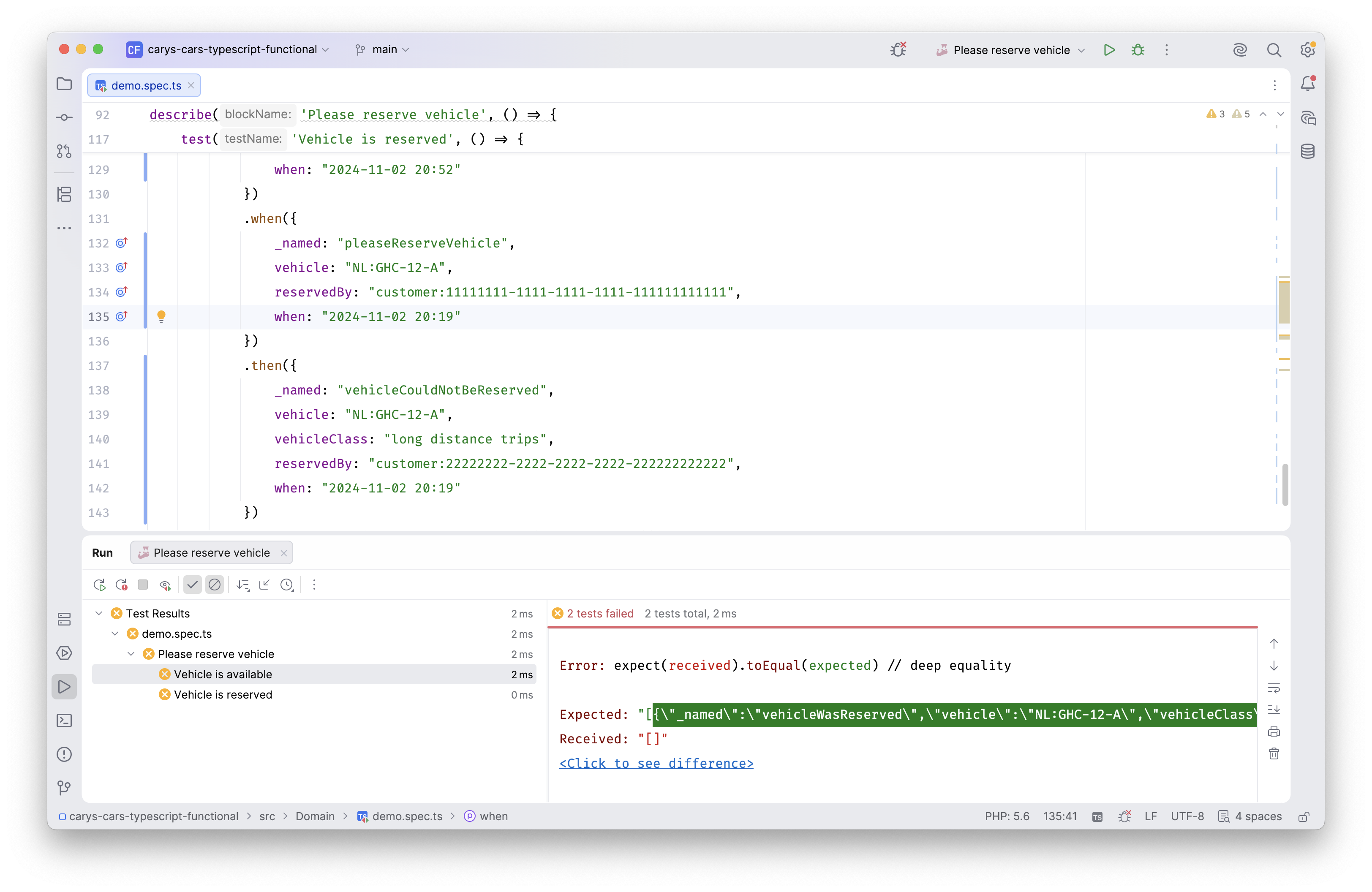
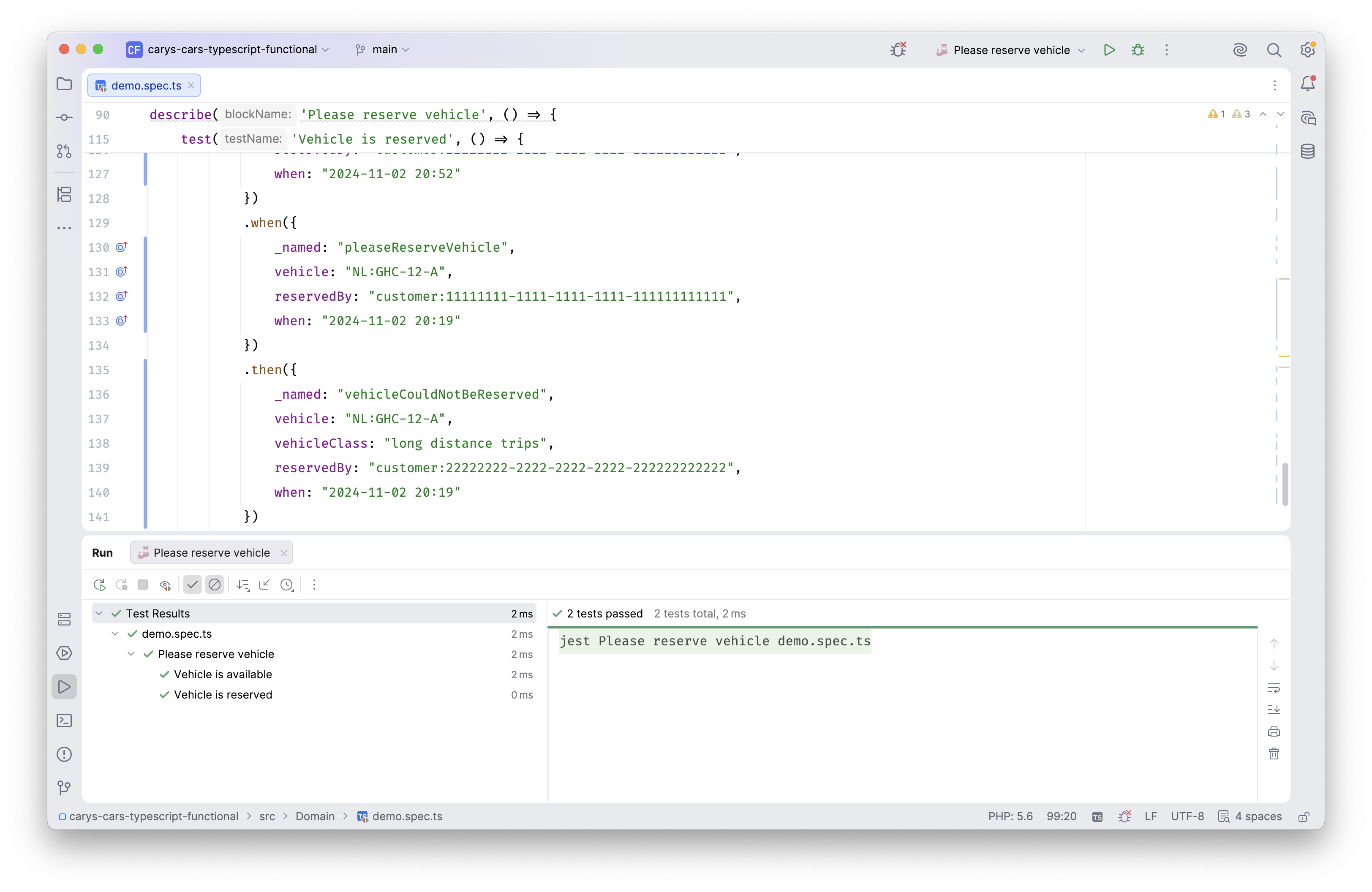
After she’s instrumented the code to her satisfaction, Sarah can show Piotr a working environment where the car rental experience has come to life based on the process Piotr defined with Ann Studio. And if the project requirements have changed in the meantime, no problem, Piotr can update the process in Ann Studio, or create a new one completely, for Sarah to use when she updates the code.
Conclusion
Ann is more than a tool, it’s a way of working that is standing on the shoulders of giants.
- Explore solutions with experts in the field
- Define workflows using examples to express concrete stories what should happen in distinct scenarios.
- Turn the stories into executable specifications using Ann Studio
- Implement and continuously test that the system behaves as intended thanks to out-of-the-box test automation
- Iterate on the design, and improve for what is important in your situation: time-to-market, operational excellence, or a reduction in complexity.
What is next?
- Getting Started: Continue to learn about concepts in Ann in our guide for Getting Started.
- Reach Out: Got a question? We’d love to hear it.